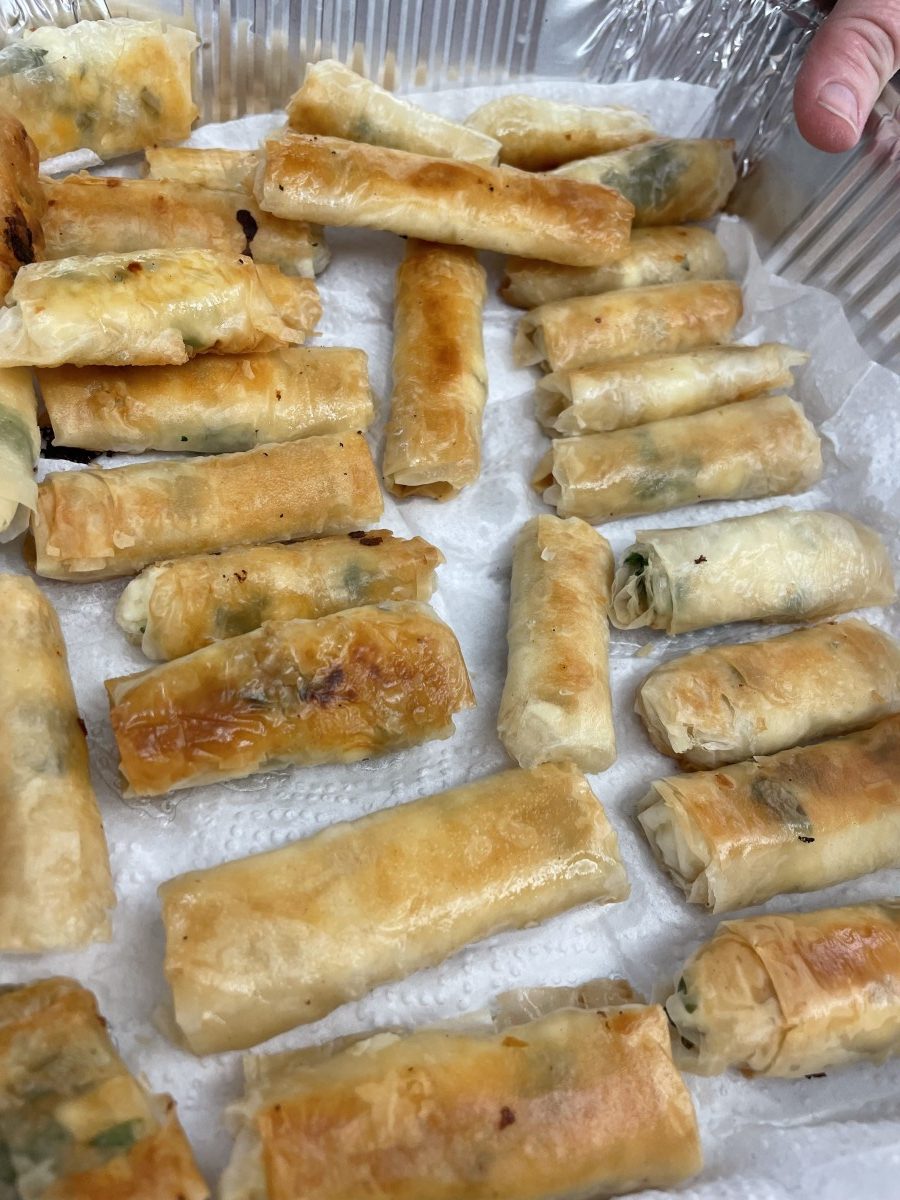
If you are looking for a fun and easy appetizer, these phyllo rolls are a great choice. We made them in class recently. Once you get the rolling part down, they can be made pretty quickly. The end result is a fun snack or appetizer that is crisp on the outside and cheesy in the middle. We called them phyllo “cigars” after rolling. They are smaller than a real cigar, but the shape is similar. One of the ladies in class asked about using a cheese other than feta- she isn’t a fan. Yes, you can substitute almost any other cheese. I think mozzarella with some Parmesan cheese would be great. Smoked Gouda also comes to mind as a fun option. You could also play around with different herbs. Perhaps basil and oregano with mozzarella.
They can be constructed ahead of time then fried when ready to serve. I did fry some once and saved a few to reheat in the oven after. They were still pretty good. Before you ask- I don’t have an air fryer but they should be doable that way. I would give them a spritz of oil first though, to help crisp the crust.
It was a busy class and I wish I had gotten a better picture of them. They really are delicious.
So here is the recipe. Enjoy!!
Phyllo Cheese Rolls
2 cups feta cheese, crumbled
¼ cup chopped parsley
10 phyllo sheets, thawed
1 tablespoon water, to brush the phyllo sheets
½ cup oil to fry the rolls
In a bowl, combine the crumbled feta cheese and chopped parsley. Mix them together until they are well combined. Lay one phyllo sheet flat on a clean surface. Cut the sheet into 4 equal strips. Cover the remaining phyllo sheets with a damp towel to keep them from drying out while you’re working. Place about a tablespoon of the feta and parsley mixture at one end of a strip. Fold the end over the filling, then fold in the sides and start rolling up the strip towards the other end, like a cigar. Repeat with the remaining phyllo strips. Once you reach the end of each strip, use a bit of water to brush the end and then press it onto the roll to seal it. Repeat this process until all your filling is used.
Heat the oil in a frying pan over medium heat. Once the oil is hot, add a few rolls at a time, making sure not to overcrowd the pan. Fry them until they’re golden brown on all sides, which should take about 2-3 minutes. Once the rolls are fried, remove them from the oil using a slotted spoon and transfer them to a paper towel-lined plate to drain any excess oil. Continue frying the remaining rolls. Once all the rolls are fried and drained, they’re ready to be served. Enjoy them while they’re hot and crispy!
I love sweet and sour sauce. I have made many versions over the years and have used different fruits in them. I decided to try to make sweet and sour sauce with a ripe pear. It worked out wonderfully. Even better than I expected, actually. The sweetness of the pear was a great addition to the sauce. It came out a rich, mahogany color and is full of flavor. I will make a double batch the next time. I have already enjoyed it with egg rolls. Thinking of making sweet and sour chicken next.
I try to be as exact in measuring as I can. I had a pretty big Bartlett pear, but use 2 small pears, if that is what you have. Any pear will work in this recipe- just be sure it is ripe. As the sauce cooks the pear pretty much falls apart and disappears into the sauce. I also used Sriracha sauce, which is hot, but not as hot as some other hot sauces. Depending on the brand of hot sauce you are using, you might want to add less. Then again, heat is a matter of personal preference. Spice it up according to your own taste. That is one of the perks of making it yourself.
When I make a sweet and sour sauce- I use Clear Gel, instead of traditional corn starch. It is modified cornstarch (non-waxy) and when you reheat the sauce, it will stay thick. Regular cornstarch will often thin out when reheated. Clear Gel is used in pie fillings and a lot of frozen foods and condiments. Often listed on the label as modified food starch. It looks just like regular cornstarch. I buy mine online or when I am in stores in Amish communities.
So here is the recipe for a sweet and sour sauce I will surely make again. Planning on making some to freeze, too.
Pear Sweet and Sour Sauce
1 large pear, (about 8 oz.) peeled and diced fine
½ c. cider vinegar
½ c. sugar
3 T. soy sauce
1 T. minced garlic
1 T. Sriracha sauce- or other hot sauce- add to suit your taste
2 t. grated ginger
3 T. water
2 T. cornstarch or Clear Gel*
2 t. sesame oil
In medium saucepan, combine all ingredients, except the water, cornstarch and sesame oil . Simmer mixture, covered about 5-7 minutes, or until pear becomes tender. Stir occasionally. Combine cornstarch with water and stir until smooth. Pour slowly into simmering pear sauce, stirring to prevent sticking. Sauce with thicken. Stir in sesame oil. Makes about 2 cups. Keeps in fridge for weeks.
* If you use a type of cornstarch called Clear Gel, you can reheat the sauce without it becoming runny. Clear Gel, also called modified food starch, or modified cornstarch, is available online and at some specialty food stores. I find it in Amish communities.
Halloween isn’t the only holiday next week. Many people will be celebrating Dia de los Muertos (Day of the Dead). It is a holiday to remember and honor loved ones who have passed. It traditionally runs from October 31 to November 2.
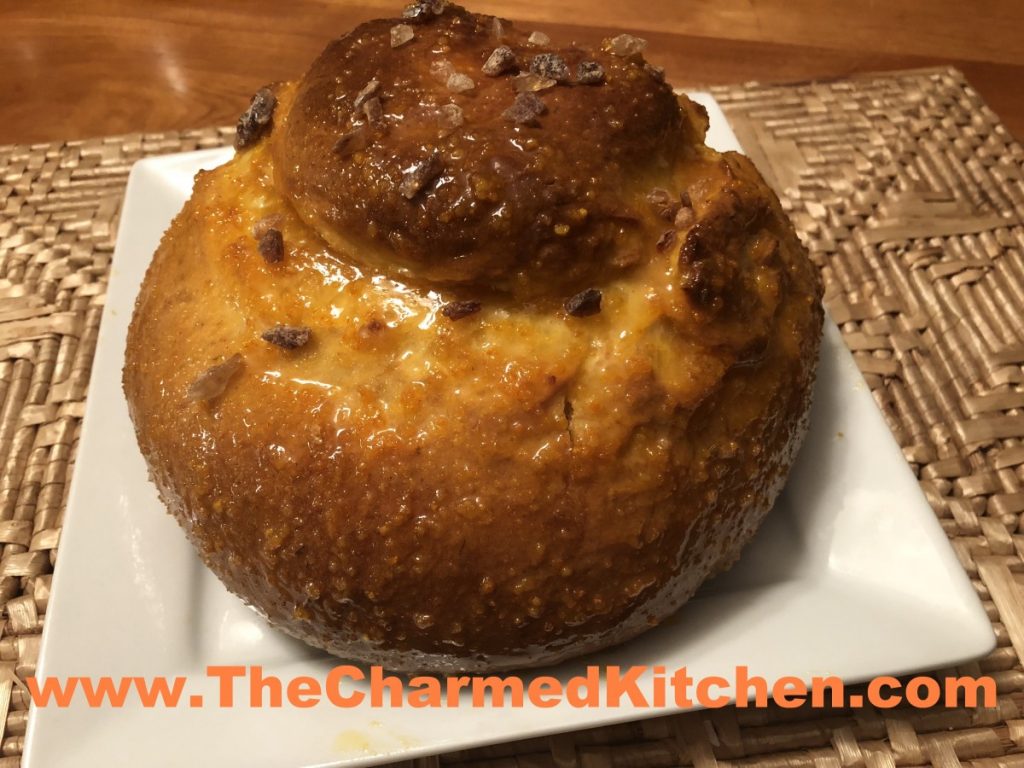
Pan de Muertos is a traditional bread made for this holiday. This is a version of that bread that is flavored with anise (or fennel) and orange. It is glazed, after baking, with an orange sauce, then sprinkled with a little extra sugar. I like to use rock sugar, which, as the name implies, is a large sugar that looks like small rocks.
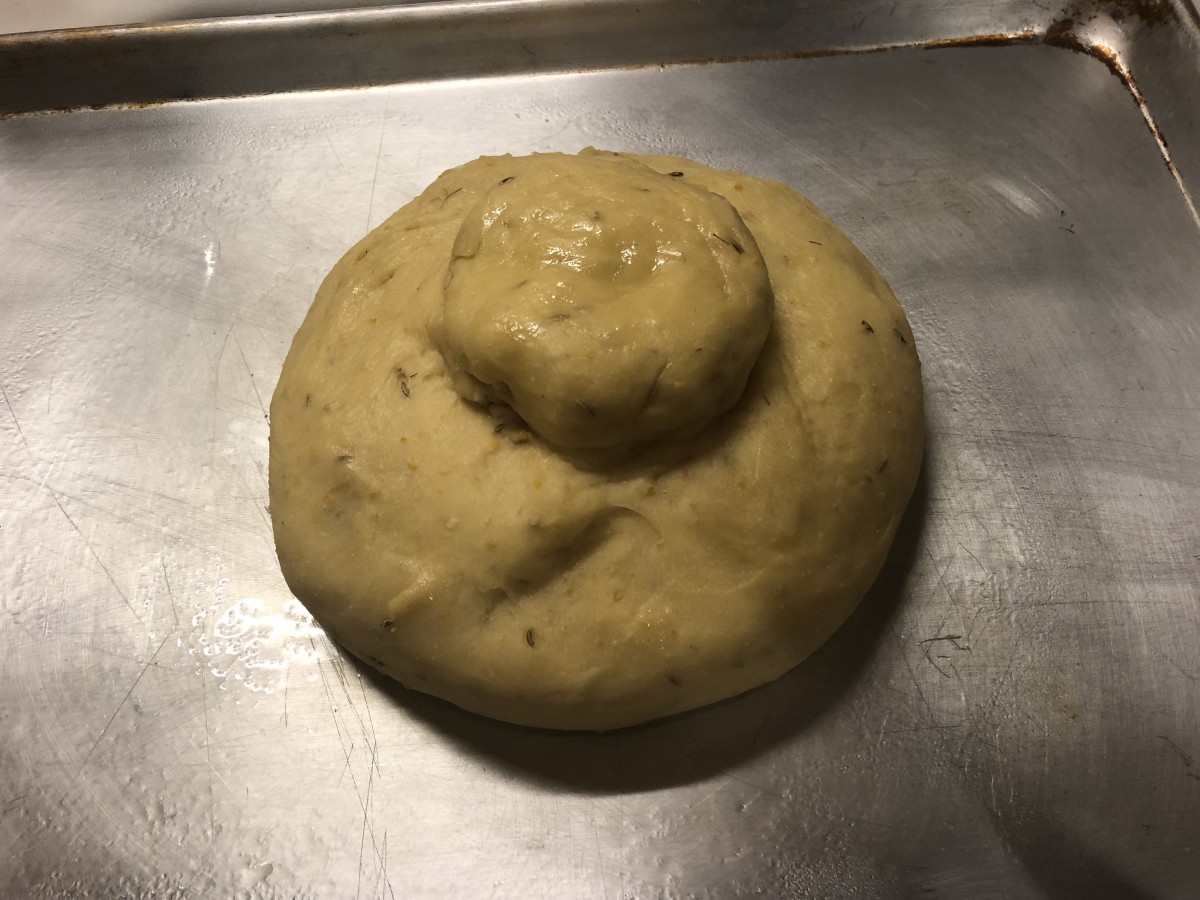
I shaped the dough into a round shape, with a knob of dough on the top. You can also mold the bread into different shapes like angels or animals.
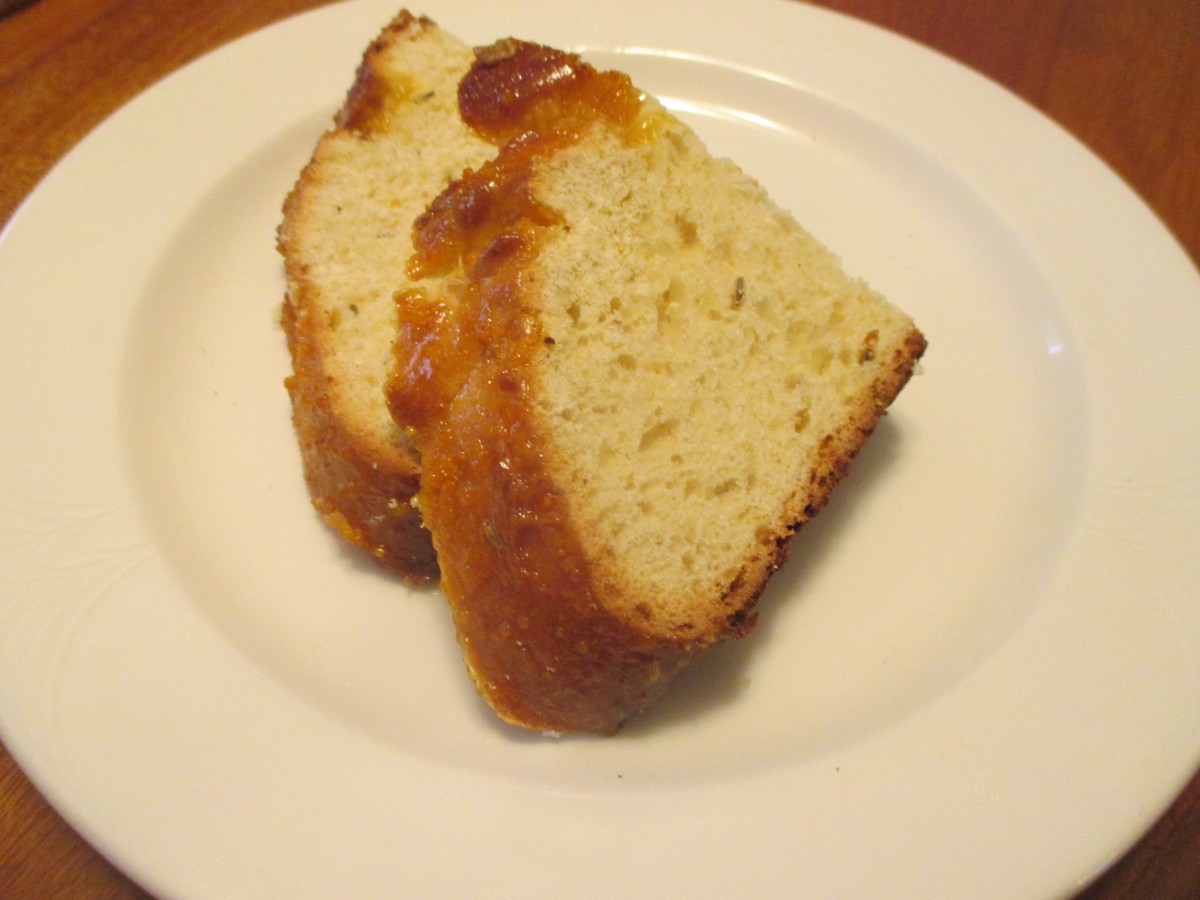
The bread itself is so tasty. It is a rich dough with a lovely fragrance and texture.
Here is the recipe.
Pan de Muertos (Mexican Bread of the Dead)
1/4 c. each butter, milk and water
3 c. all-purpose flour
1 1/2 t. active dry yeast (half a packet)
1/2 t. salt
2 t. anise seed or fennel seed
1/3 c. sugar
2 eggs, beaten
2 t. orange zest
Glaze:
1/4 c. each sugar and orange juice
1 T. orange zest
Topping:
2 T. sugar, I used rock sugar
Heat together butter, water and milk until the butter melts. Cool to warm. In a large bowl combine 1cup of the flour, yeast, salt, anise seed and 1/3 c. sugar. Beat in the milk mixture then add the eggs and orange zest and beat until well combined. Stir in 1/2 cup of flour and continue adding more flour until the dough is soft. Turn the dough out onto a lightly floured surface and knead until smooth and elastic. Place the dough into a lightly greased bowl cover with plastic wrap and let rise in a warm place until doubled in size, about 1- 2 hours. Punch the dough down and shape it into a large round loaf with a round knob on top. Place dough onto a baking sheet, loosely cover with plastic wrap and let rise in a warm place for about 1 hour or until just about doubled in size. Bake in a preheated 350-degree oven for about 35 to 45 minutes. Cool on rack 5 minutes then brush with glaze. To make glaze: In a small saucepan combine the 1/4 cup sugar, orange juice and orange zest. Bring to a boil over medium heat and boil for 2 minutes. Brush over top of bread while still warm. Sprinkle glazed bread with 2 T. sugar.
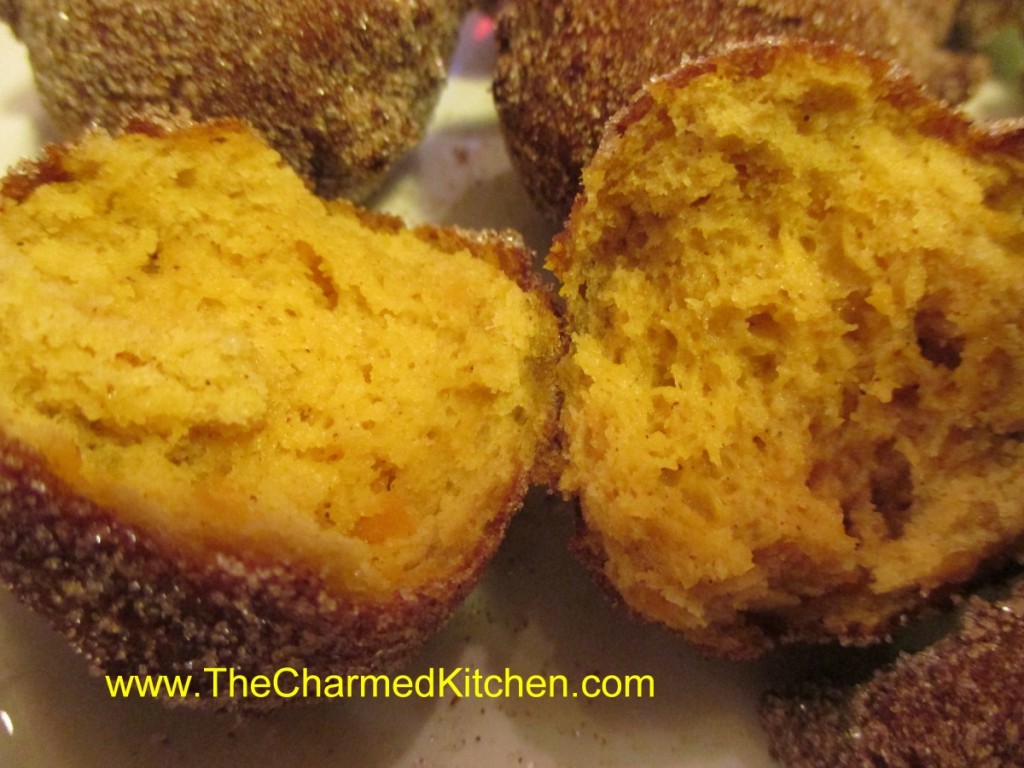
These tasty fritters are a fun fall dessert. This is a great recipe when you have a little cooked pumpkin or winter squash to use up. The recipe only uses a cup of cooked pumpkin or winter squash.
It is a pretty simple recipe. I started with cooked butternut squash puree. I added eggs, flour, baking powder and a few other ingredients, then fried them up in oil, and ended up with a really good fritter. Crispy on the outside, soft and tender on the inside. I drained them on paper towels and then rolled them in cinnamon sugar while still warm. You could roll them in powdered sugar or dip them in a powdered sugar glaze. I think I might make a maple glaze for the next batch.
Pumpkin Fritters
1 c. cooked, mashed pumpkin or winter squash
2 eggs
2 T. brown sugar
2 t. baking powder
1 t. cinnamon
1/2 t. baking soda
1/2 t. nutmeg
1/2 t. salt
1 1/2 c. flour
oil for frying
cinnamon sugar for rolling- powdered sugar would work, too
In mixing bowl combine all ingredients, except the flour and beat until smooth. Stir in flour. Batter will be thick. Heat oil to 350 degrees.* There should be enough oil in the pan top be at least 1 inch deep- or deeper. To save oil I used a smallish pan and cooked 3-4 fritters at a time. Drop dough by rounded teaspoonfuls into hot oil and cook, turning once until golden brown on both sides. This will take about 3 minutes. Drain on paper towels then roll in cinnamon sugar while warm. Makes 24-30. Best served warm.
* Fun way to know when your oil has hit 350 degrees. Place an un-popped popcorn kernel in the oil. Popcorn pops at 350 degrees.
I remember how fun it was to watch my parents making doughnuts. The making of the dough, then cutting the dough into circles. The dough circles would then rise on the counter, under linen towels until puffed up. Gently they would be fried, then set on paper towels to drain. Once cooled, the filling would be piped into them through a pastry bag filled with some wonderful jelly or jam.
I also remember learning to fill them. Squeezing the jelly from the pastry bag into the doughnut was tricky. You wanted to make sure there was enough filling, but not so much that they split open. After a couple of tries, I realized you could figure it out by the weight of the filled doughnut in your hand.
My parents were both excellent bakers. My father had even been a professional baker at one time. I thought it was normal to have parents who made doughnuts. It was the norm in my family.
My folks only made them for special occasions. Unless my Mom got a taste for homemade jelly doughnuts. Then, my dad would make them for her. She loved jelly doughnuts. More than pretty much anyone else I knew.
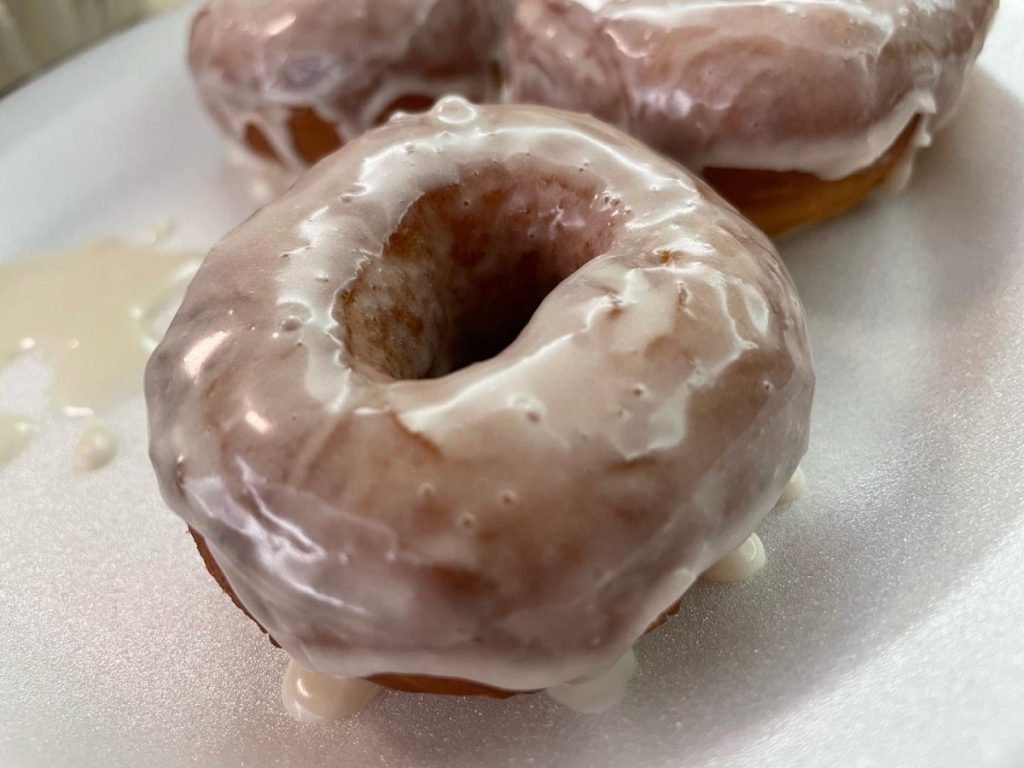
You can fill them with any number of jellies, jams and cream fillings. You can also use a doughnut cutter to create a round doughnut and a doughnut hole. These can be glazed or rolled in powdered sugar, instead of being filled.
Light and Fluffy Classic Doughnuts
1 ¼ c. milk
2 ¼ teaspoons (one package) active dry yeast
2 eggs
½ c. butter, melted and cooled (1 stick)
¼ cup granulated sugar
1 teaspoon salt
4 ¼ cups all-purpose flour, plus more for rolling out the dough
2 quarts oil, for frying, plus more for the bowl.
Heat the milk until it is warm but not hot, about 90 degrees. In a large bowl, combine it with the yeast. Stir lightly, and let sit until the mixture is foamy, about 5 minutes. Using an electric mixer or a stand mixer fitted with a dough hook, beat the eggs, butter, sugar and salt into the yeast mixture. Add half of the flour (2 cups plus 2 tablespoons), and mix until combined, then mix in the rest of the flour until the dough pulls away from the sides of the bowl. Add more flour, about 2 tablespoons at a time, if the dough is too wet. If you’re using an electric mixer, the dough will probably become too thick to beat; when it does, transfer it to a floured surface, and gently knead it until smooth. Grease a large bowl with a little oil. Transfer the dough to the bowl, and cover. Let rise at room temperature until it doubles in size, about 1 hour. Turn the dough out onto a well-floured surface, and roll it to 1/2-inch thickness. Cut out the doughnuts with a doughnut cutter, concentric cookie cutters or a drinking glass and a shot glass (the larger one should be about 3 inches in diameter), flouring the cutters as you go. Reserve the doughnut holes. If you’re making filled doughnuts, don’t cut out the middle. Knead any scraps together, being careful not to overwork, and let rest for a few minutes before repeating the process. Put the doughnuts on two floured baking sheets so that there is plenty of room between each one. Cover with a kitchen towel, and let rise in a warm place until they are slightly puffed up and delicate, about 45 minutes. If your kitchen isn’t warm, heat the oven to 200 at the beginning of this step, then turn off the heat, put the baking sheets in the oven and leave the door ajar. About 15 minutes before the doughnuts are done rising, put the oil in a heavy-bottomed pot or Dutch oven over medium heat, and heat it to 375. Meanwhile, line cooling racks, baking sheets or plates with paper towels.
Carefully add the doughnuts to the oil, a few at a time. If they’re too delicate to pick up with your fingers (they may be this way only if you rose them in the oven), use a metal spatula to pick them up and slide them into the oil. It’s O.K. if they deflate a bit; they’ll puff back up as they fry. When the bottoms are deep golden, after 45 seconds to a minute, use a slotted spoon to flip; cook until they’re deep golden all over. Doughnut holes cook faster. Transfer the doughnuts to the prepared plates or racks, and repeat with the rest of the dough, adjusting the heat as needed to keep the oil at 375. Glaze or fill as follows, and serve as soon as possible.
To fill doughnuts use a pastry bag fitted with a long tube tip for filling. I have these handy plastic syringes which are easy to use. Insert tube tip into doughnut and squeeze gently until doughnut is filled with jam. Be careful not to overfill or doughnut will split. Once filled doughnuts are topped with a powdered sugar glaze or rolled in powdered sugar.
Apricot Filling
12 oz. dried apricots, chopped up
2 c. water
2 c. sugar, or to taste
Combine apricots with water in saucepan and simmer, covered until apricots are really tender. This will take at least an hour- add more water, if needed. Add sugar to taste and cook until thickened. Puree mixture in a blender.
Strawberry Filling
1 lb. strawberries
1½ c. sugar
½ c. water
3 T. cornstarch
Crush berries and place in saucepan with the sugar. Cook until berries are tender, about 10 minutes. Combine water with cornstarch and add to strawberries. Cook until thickened and bubbly. Cool. , Puree. Makes 2 cups.
Classic Glaze
2 c. powdered sugar
¼ c. milk
1 t. vanilla
Whisk together sugar, milk and vanilla until smooth. When the doughnuts are cool enough to handle, dip into the glaze. Put on racks to let the glaze harden.
These pancakes make a wonderful breakfast for an Autumn morning- or any morning for that matter.
I want to be honest with you from the start. I made these pancakes with cooked butternut squash and not pumpkin. They were terrific. Many winter squash can be used just like pumpkin in cooking. The problem is that when I post a recipe as “squash” instead of pumpkin, people get confused. Perhaps they are thinking summer squash, like zucchini. Maybe the word pumpkin just conjures up a clearer image.
The pancakes were really good, and isn’t that what matters?
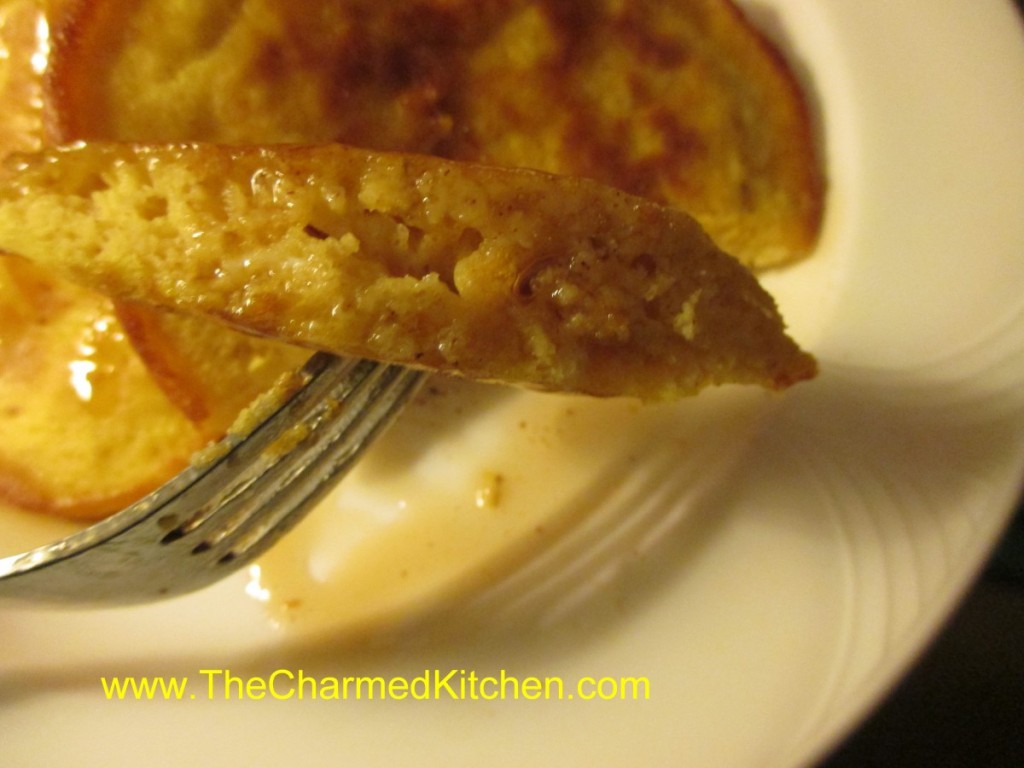
I make my own baking mix, and that is what I used as the base for the pancakes. You can just buy a mix, like Jiffy or Bisquick, if you prefer. The pancakes are light and fluffy, with a nice “pumpkin” flavor. We had them with warmed maple syrup, but they would also be nice served with powdered sugar or perhaps a fresh berry syrup.
Pumpkin Pancakes
2 c. baking mix – like Bisquick or Jiffy Mix – I make my own*
3 T. brown sugar
2 t. cinnamon
1 t. nutmeg
1 1/2 c. evaporated milk
1 c. pureed pumpkin or winter squash
2 eggs, beaten
2 t. vanilla
Combine dry ingredients in mixing bowl and set aside. Whisk together wet ingredients and stir into dry ingredients. Lightly grease a skillet and cook over moderate heat. Use about 1/3 c. of batter per pancake. Turn when edges appear dry. Makes 16.
*Chef Pastry Mix/ Biscuit Mix
8 cups sifted, all-purpose flour
1 c. powdered milk
1 c. powdered buttermilk
¼ c. baking powder
1 T. salt
2 c. shortening, butter or coconut oil*
Sift dry ingredients together 3 times. Cut in shortening, butter or coconut oil to resemble cornmeal. Keep in an airtight container. Store in a cool dry place and use within six months.
* I use coconut oil and store in the fridge. If you use butter or coconut oil- you have to keep in the fridge.
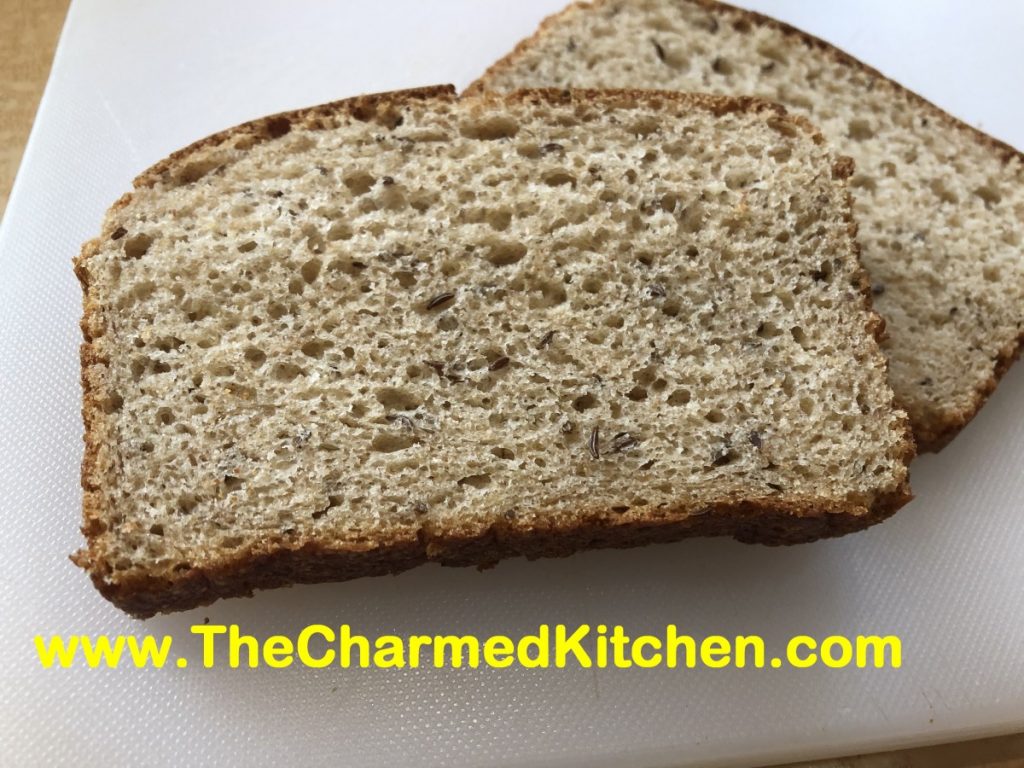
I have been playing around with baking rye bread for awhile now. Tried a few different recipes recently. I found this recipe online, but I did change it a little. I ended up with a rye bread with lovely flavor and texture.
Rye bread can be tricky. Rye flour needs to be paired with wheat flour to have the necessary type of gluten to rise. Rye flour does contain gluten, but not the type of gluten that gets stretchy. Rye flour also rises better when some acid is added to the dough. Molasses adds some acid. In this dough, sour pickle juice is added. Vinegar also works.
Rye flour is higher in the enzymes that break down starch into sugars. Starch is needed to form the structure of the crumb, and if too much starch is split up, the texture of the bread suffers and becomes gummy. Traditionally, this is prevented by acidifying the rye dough. This is why breads with a high percentage of rye flour are made with rye sour (rye-based sourdough starter), even if commercial yeast is added, to preserve the structure of the bread.
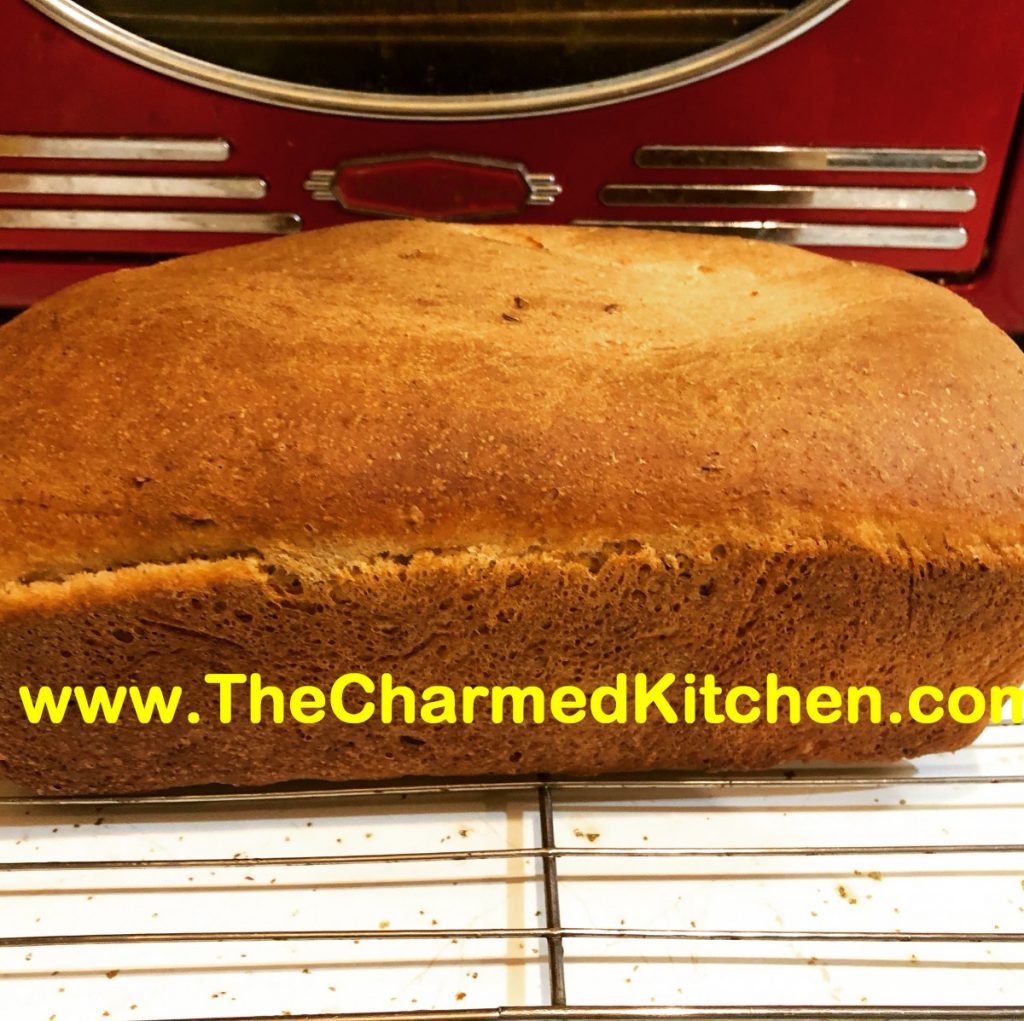
Rye bread cooling down
So here is the most recent rye bread I made.
Deli Rye Bread
2 c. bread flour
1 c. rye flour
3 T. potato flakes
2 T. caraway seeds
2 T. brown sugar
1 packet active dry yeast- scant tablespoon
2 t. salt
1 c. warm water
¼ c. olive or avocado oil
¼ c. sour pickle juice
2 T. molasses
Place bread flour, rye flour, potato flakes, caraway seeds, brown sugar, yeast, and salt in the bowl of a large stand mixer. Stir dry ingredients to combine. Add warm water, oil, pickle juice and molasses into dry ingredients. Fit dough hook onto mixer and beat until dough is just coming together. It will look rough. Cover bowl with plastic wrap and let rest for about 30 minutes. Remove plastic wrap and knead dough in stand mixer with dough hook until smooth, firm, and only slightly sticky, 6 to 8 minutes. Turn dough onto a floured work surface and knead until smooth, 1 to 2 more minutes. Form dough into a ball, place dough into an oiled bowl, and turn dough around several times in bowl to coat with oil. Cover the bowl with plastic wrap, set into a warm place, and let rise until nearly double, about 1 hour. Grease a 9×5-inch loaf pan. Turn dough onto a lightly oiled surface, shape into a log, and place into prepared loaf pan. Cover with a linen kitchen towel and let rise until top of dough has risen slightly over top of pan, 60 to 90 minutes. Preheat oven to 350 degrees F (175 degrees C). Bake loaf until golden brown and cooked through, about 35 minutes. If loaf browns too quickly, cover loosely with a tent of aluminum foil with shiny side out. Bread should sound hollow when tapped lightly. Remove from pan and cool on wire rack. Makes 1 loaf.
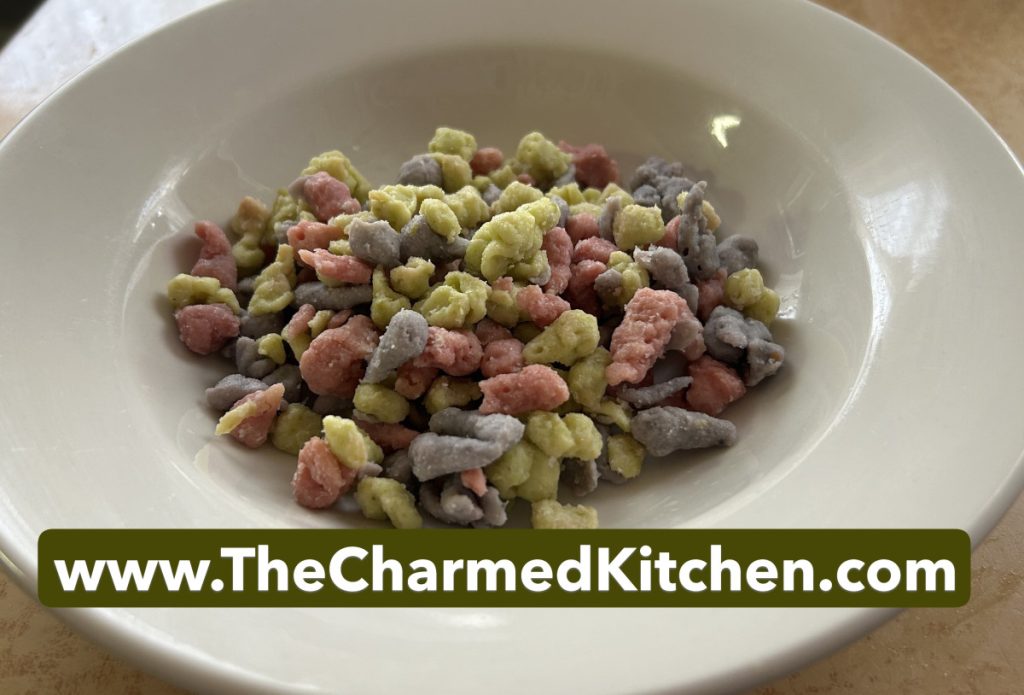
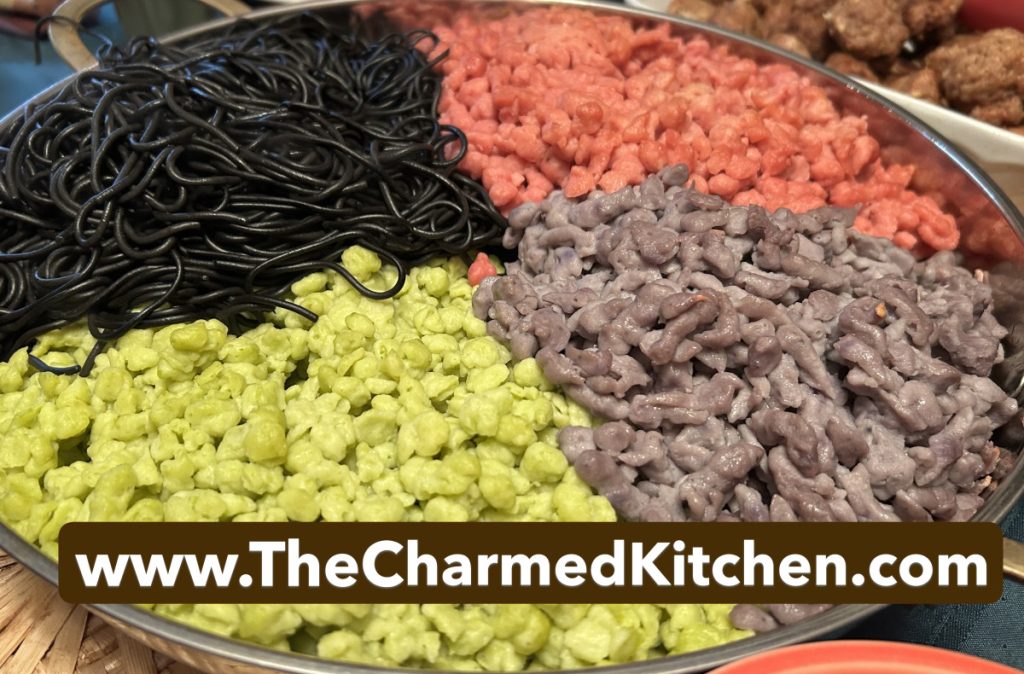
I decided to make spaetzle in different colors inspired by Halloween. I made three flavors- purple sweet potato, beet and green pea. They came out very pretty and my friends loved them. Not sure how spooky they were, though. I also served them with squid ink pasta, but that was store bought, not homemade. It made for a fun presentation. I would certainly make any of them again.
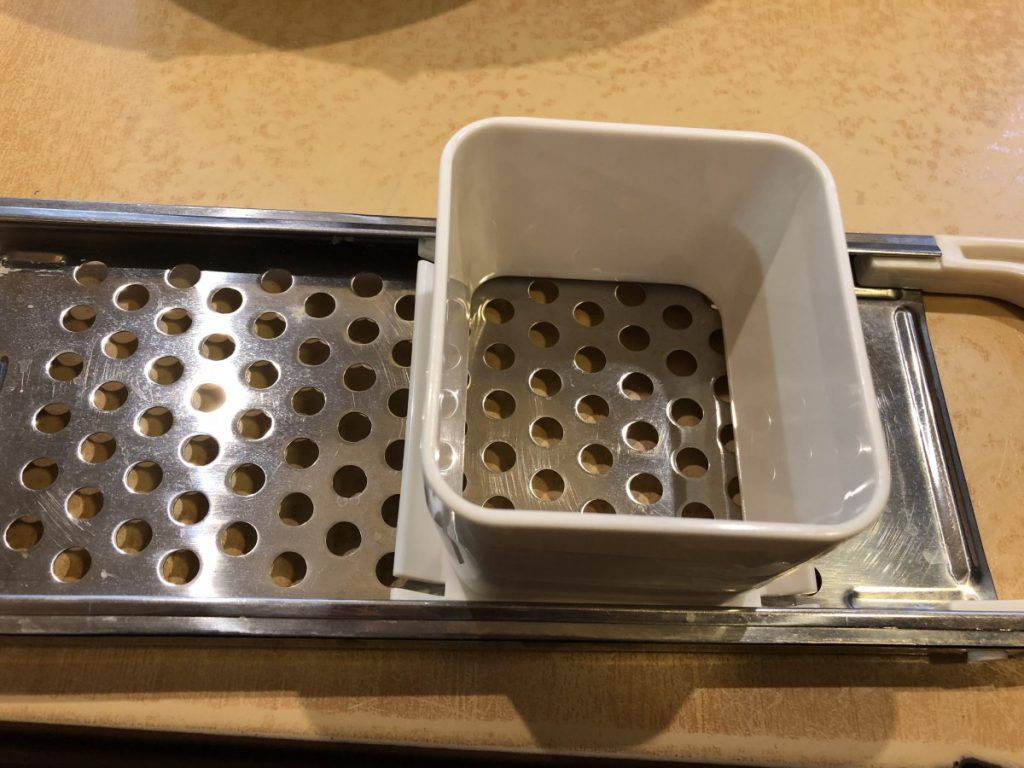
For those who aren’t familiar, spaetzle are like little dumplings or a type of pasta, depending on who you ask. The dough is a thick batter that is added to boiling water using a spaetzle maker. People will also use large slotted spoons to help the batter enter the boiling water in small pieces. They puff a bit when cooked, but deflate slightly after. They have a slightly chewy texture, but still tender, if that makes sense. My grandmother would put the dough on a cutting board and use a knife to cut little pieces off ad slide them into the water. She did it so quickly. I use a spaetzle maker – picture is at the bottom of this post. I was recently given a great hint. A perforated pizza pan- they are used to make a crisper crust- can be used as well. The pan has holes all over it. You place it over the pan of boiling water, dump the spaetzle dough onto the pan and use a spatula to press it through the holes into the boiling water. Great idea.
They were served with an array of colorful sauces, too. Because the pasta was pretty pastel in the end, I could see serving these for a Spring dinner, too. So here are the recipes, along with the recipe for my regular spaetzle.
Beet Spaetzle
1½ c. shredded cooked beets
1 egg
½ t. salt
1½ c. flour
Puree the beets. Combine egg, beets, salt and flour in a bowl and stir until batter is smooth. Batter with be thick. If it seems too thick you can add a little water or milk. Start pot of water boiling while batter rests. If using a spaetlze maker, place maker over the pot of boiling water. Place batter in the maker and slide back and forth, replacing batter as it runs out. If you don’t have a spaetzle maker, drop batter by small spoonfuls into the boiling water. Cook until they float, 3-5 minutes. Drain well before serving. To serve you can serve with a sauce or toss with butter or brown in a skillet with butter. These are also good topped with shredded cheese, but then, isn’t everything good that way?
Purple Sweet Potato Spaetzle
1 c. cooked mashed purple sweet potatoes
1 egg
½ t. salt
1½ c. flour
About ¼ c. milk or half and half
Combine potatoes with the egg, salt and flour. Stir until smooth. If batter is too thick add milk until batter is thick, but pourable. Start pot of water boiling while batter rests. If using a spaetlze maker, place maker over the pot of boiling water. Place batter in the maker and slide back and forth, replacing batter as it runs out. If you don’t have a spaetzle maker, drop batter by small spoonfuls into the boiling water. Cook until they float, 3-5 minutes. Drain well before serving. To serve you can serve with a sauce or toss with butter or brown in a skillet with butter.
Green Pea Spaetzle
1½ c. frozen peas, thawed
1 egg
½ t. salt
1½ c. flour
Puree peas until smooth. Combine with the remaining ingredients. Stir until smooth. You can add a little milk or water if the batter is too thick. Start pot of water boiling while batter rests. If using a spaetlze maker, place maker over the pot of boiling water. Place batter in the maker and slide back and forth, replacing batter as it runs out. If you don’t have a spaetzle maker, drop batter by small spoonfuls into the boiling water. Cook until they float, 3-5 minutes. Drain well before serving. To serve you can serve with a sauce or toss with butter or brown in a skillet with butter.
Spaetzle
3 eggs
1/2 c. half and half or evaporated milk
1/2 t. salt
1 1/2 c. flour
Combine all ingredients and let rest 30 minutes. Drop by small spoonfuls into boiling water. Cook until they float and puff up, about 5 minutes. Serve with soups, stews sauces. You can toss them with a little butter. I sometimes heat butter in a pan and brown them up a little. You can also add some fresh, chopped herbs to the batter.
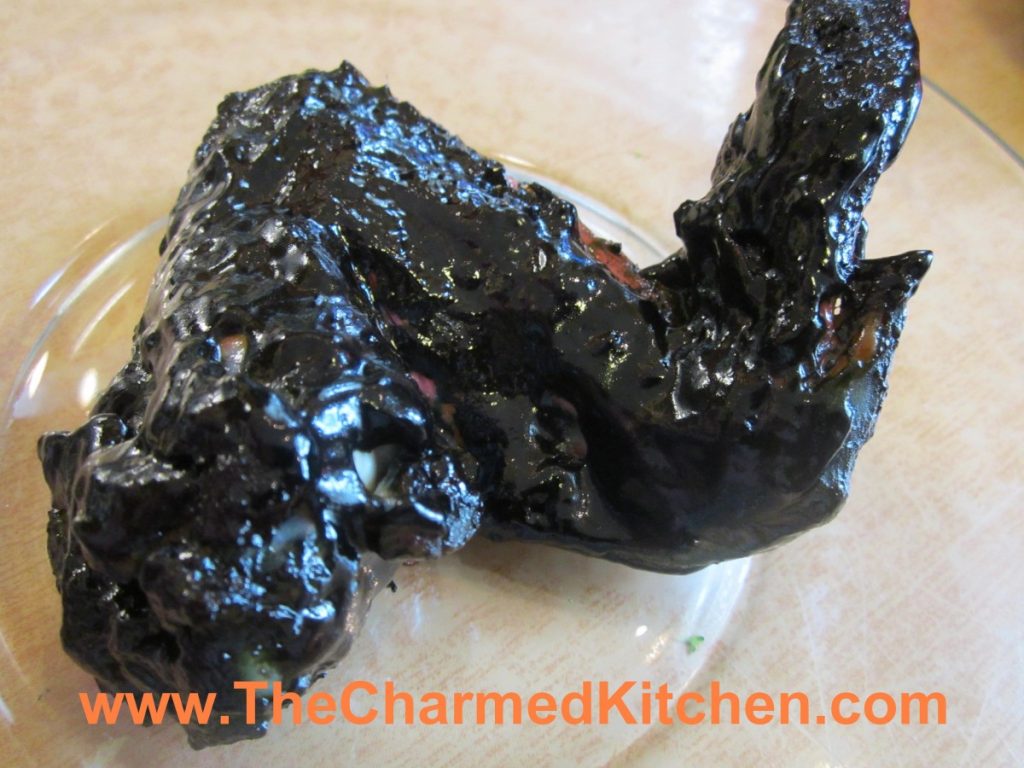
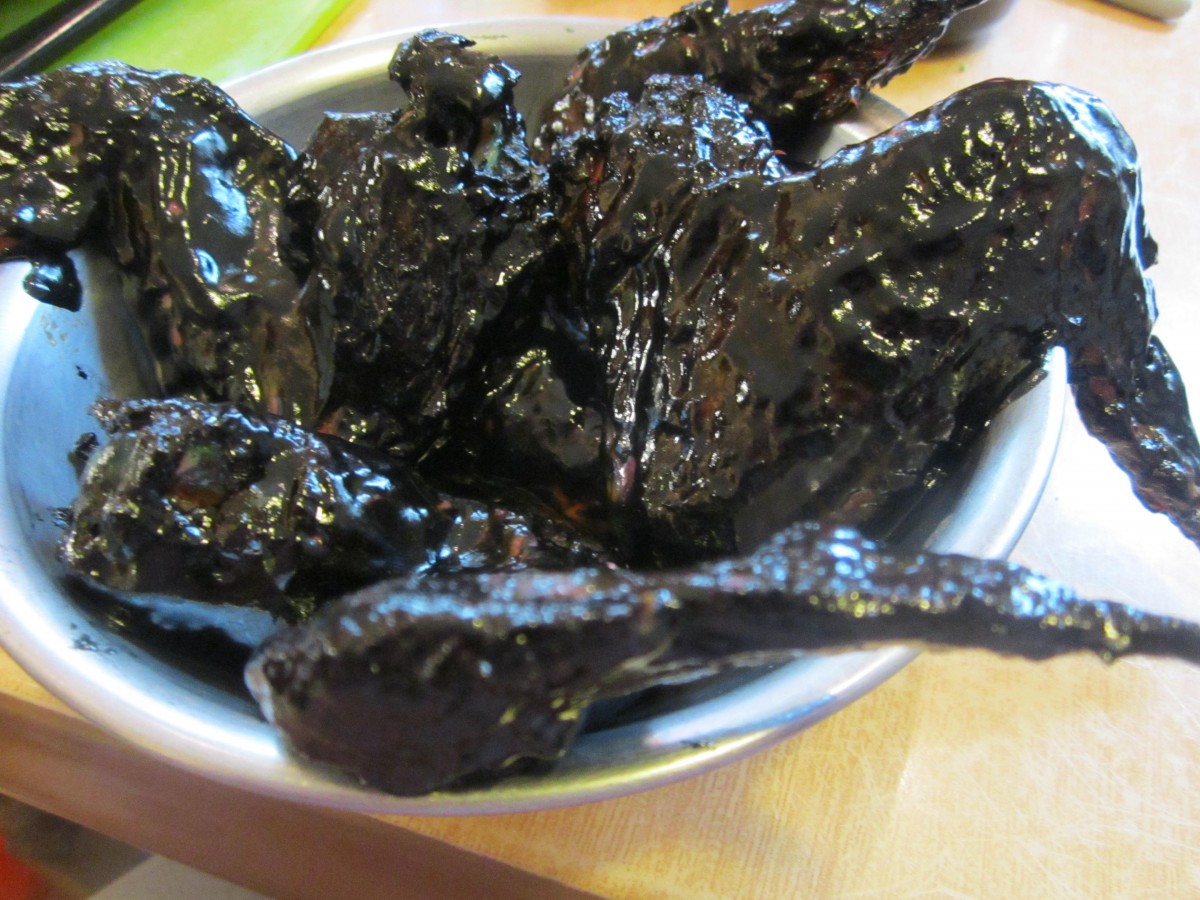
With Halloween fast approaching I thought I’d share this recipe for bat wings. OK, not really bat wings, but you already knew that. I just add black food coloring to barbecue sauce and use it to color chicken wings. You could also use black cocoa powder to make the sauce black.
I made a batch for a Halloween party a few years ago and someone actually asked if they were real bat wings.
A word of warning- when you use black food coloring it will transfer to you. No matter how careful you are when you eat the wings, you’ll end up with purple fingers. Also, for the best effect, keep the wings intact- no trimming off of the tips. You can separate the drums before serving, if you like. Makes eating a little easier. They look pretty cool when set out on the table. Creepy- but very tasty.
Bat Wings
2-3 lbs. whole chicken wings
salt and pepper
1 c. barbecue sauce- store bought or home made
black food coloring- handle carefully- it stains – or add black cocoa powder to barbecue sauce
Place chicken wings in a roasting pan, season with salt and pepper and bake in a preheated 400 degree oven for 30 minutes. Meanwhile in medium bowl combine sauce with food coloring. Add just a little black food coloring at a time. Too much will alter the flavor of the food. Remove wings from the oven and dip them in the bowl of sauce. Turn to coat. Place wings on a clean baking sheet and return to the oven. Bake an addition 45 minutes. You can baste them with additional sauce during the baking, if you like. Place on a serving platter and provide plenty of napkins.
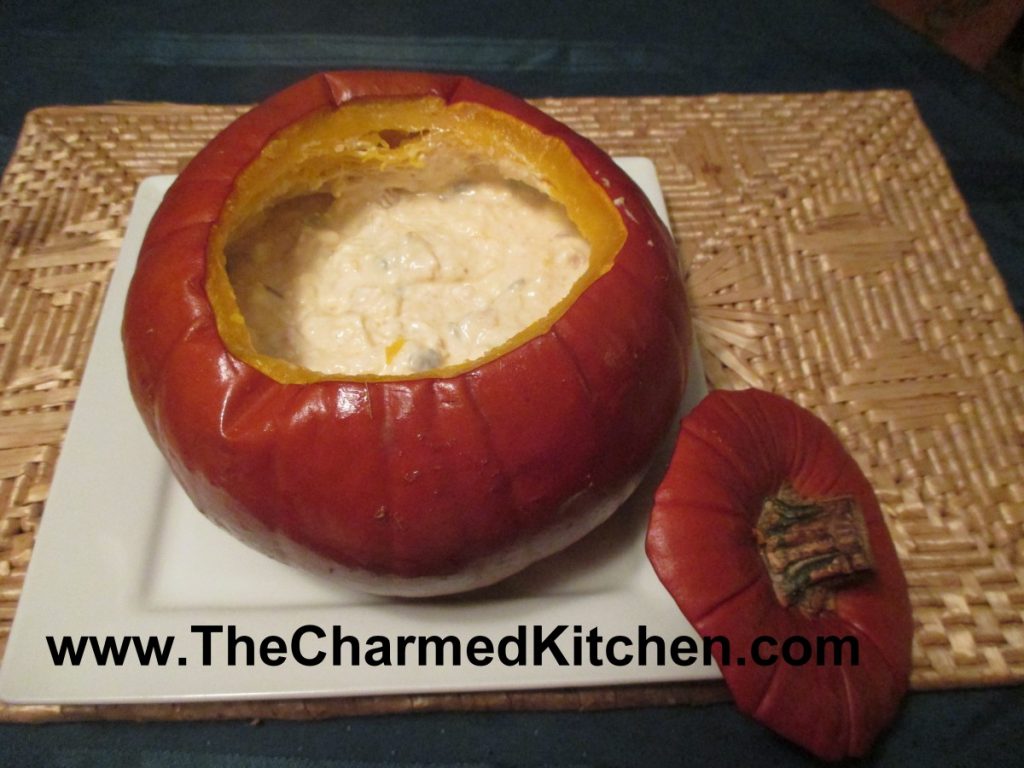
This is a pretty way to serve dips this time of year. The dip bakes inside the pumpkin- and the pumpkin bakes, too. It is served hot. Fun for Halloween, Thanksgiving, watching football games or just movie night with the family.
It really is simple and could be filled with any number of combinations of cheesy goodness. I have included the recipe I used in the picture. I also included my recipe for Spinach and Artichoke Dip, to give you another option.
You could also add a hot cheese sauce and serve like fondue, with long forks and pieces of bread.
You get a pie pumpkin, about 2-3 lbs. Cut off the top to make a lid and scoop out the seeds, like you would if you were making a Jack-o-Lantern. Wipe off the outside and then just fill it up with the dip mixture. Put the lid back on, bake for an hour, and you are good to go. The fun part is scraping some of the cooked pumpkin in with the cheese dip. More detailed directions follow.
So here is the recipe for making the cheesy filled pumpkin. I think it is simple enough to serve anytime, not just on a holiday. Enjoy!!
“Pumpkin” Cheese Dip
Directions: Preheat oven to 350 degrees. Cut off top of pumpkin. Cut in at an angle, so top will fit like a lid and not fall in. Set top aside. Scoop out seeds and clean out any stringy bits*. Set pumpkin on a baking sheet. Combine cheese filling of your choice and place inside the pumpkin. Place the top of the pumpkin back on the pumpkin, and place in oven. Bake for 1 hour. Remove pumpkin and place on heat proof dish. I used a glass pie plate. Remove lid. Serve with crusty bread or crackers.
Smoky Cheese Dip
8 oz. cream cheese, cubed
4 oz. extra sharp cheddar cheese, shredded
8 oz. bacon, cooked and crumbled
½ c. sour cream
¼ c. mayo
¼ c. chopped parsley
½ t. each cumin and smoked paprika
Pinch of nutmeg
½ c. hulled pumpkin seeds
In medium bowl, stir together all ingredients, except the seeds. Place this mixture in the pumpkin when ready to bake. Don’t add the pumpkin seeds until right before serving. Stir them in a little, if you like.
Another nice choice…….
Spinach and Artichoke Dip
1 (12-14 oz.) can artichoke hearts, drained and coarsely chopped
10 oz. package frozen spinach, thawed and squeezed dry
8 oz. cream cheese, cubed
4 oz. shredded cheddar cheese
½ c. diced onion
¼ c. Italian dressing
Dash of hot sauce
In medium bowl, combine dip ingredients, stirring to combine. Place in pumpkin when ready to bake.
* You can rinse off the seeds, lightly salt them and toast them, if you like. Then serve with the pumpkin dip. If you aren’t interested in eating them- please put them outside for the birds to eat.